Pages

Showing posts with label vegetables-fruit 瓜果类. Show all posts

Thursday, April 2, 2020

Covid-19 Man Shopping > Cucumber


Cucumber
( Curucumis sativus )

Cucumber / Timun ( 青瓜 / 黄瓜 ) is a very common fruit vegetable.  Its very unlikely to get it wrong. 

It can be eaten raw, with nasi lemak, which is incomplete without it.  It is often used in rojak, acar or pickled ( check out : cucumber-salad-in-soy-sauce , pickled cucumber Hakka-style  )  Nevertheless, it is cooked together with a wide variant of other ingredients.  ( stir-fried-cucumber )


Depending on variety, cucumber may have a mild melon aroma, resulting from unsaturated aldehydes such as (E,Z)-nona-2,6-dienal, and the cis- and trans- isomers of 2-nonenal.  The slightly bitter taste of cucumber rind results from cucurbitacins.


Matured ( old ) cucumber ( 老黄瓜) is used primarily in Chinese cooking, especially in stewing soup. ( read old-cucumber-soup )

Japanese cultivar of cucumber is used in cucumber ( 日本小青瓜 ).  it is longer, slender and darker green in colour.  It has mild taste, crunchy, lesser seeds and thus widely used as salad. 


Looks like cucumber, sounds like cucumber, but not cucumber ......


Labu Air / Bottle Gourd
Lagenaria siceraria
Bottle gourd ( 瓠子 / 节瓜 ) have a variety of shapes and sizes.  This particular variety has cylindrical shapes, almost similar to a cucumber, only that it’s slightly lighter in colour shorter and fatter.  For untrained eyes, it may be mistakenly taken as a cucumter !

Bottle gourd is cultivated by human since beginning of time.  It was believed to be originated from Africa, carried to Asia and Europe via human migration and trade.

It is usually consumed cooked – stir-fry or soup.

Raw bottle gourd contains cucurbitacins that are cytotoxic at high concentrations.  Tetracyclic triterpenoid which caused the bitter taste, could cause stomach ulcers.  Thus it is not recommended to consume bottle gourd raw or juiced.


Timun Bulu / Labu Bulu
Benincasa hispida var hispida
Timun bulu / Labu bulu  毛瓜 )is a variety of Benincasa hispida ( 葫芦 ).

It looks like a furry cucumber, but with slight different pattern on the skin.  They are sweet and succulent, almost similar to zucchini.


It is best cooked lightly : steamed or stir-fried,  or soup.


Wednesday, April 1, 2020

Covid-19 Man Shopping > Brinjal


Brinjal ( Solanum melongena ) is a plant species in the nightshade family Solanaceae.  


Botany

The fruit is botanically a berry.  There are different cultivars of different size, shape and colour.  

It was originally domesticated form of the wild nightshade species thorn or bitter apple, Solanum incanum, with probably two independent domestications : one in South Asia and one in East Asia.

There are 3 recognized varieties :
S. elongena var esculentum – common brinjal, including white varieties
S. melongena var depressum – dwarf brinjal
S. melongena var serpentum – snake brinjal


Etymoloty

Eggplant
The name eggplant is usually used in North America and Australia.  First recorded in 1763, eggplant was originally referred to the white cultivars, which look very much like hen’s egg.  The white, egg-shaped varieties of the eggplants are also known as ‘garden eggs’ and ‘vegetable eggs’

Aubergine
The word aubergine and brinjal were derived from Arabic word bāḏinjān ( باذنجان‎).  Yet, āḏinjān is itself a loan-word from Dravidian language, which in turn borrowed from Indic languages.


 Culinary

The fruit is mostly purple, spongy, absorbent, but low in both macronutrient and micronutrient.  However, its capacity of absorbing oils and flavors make it popular in culinary.

Raw brinjal can have a bitter taste, with an astringent quality, but it becomes tender when cooked and develops a rich,


 Fun Facts

The colour of purple skin of brinjal is due to the anthocyanin nasunin.

The browning of the brinjal flesh is due the oxidation of polyphenols.


Friday, June 29, 2018

清炒蒲瓜


before

after


Sunday, March 13, 2016

Simply Boiled Brinjal 水煮茄子


茄子味甘而平,有味似无味。肉颇厚润,煮熟即软,善吸味,能藏油。皮的口感很韧。

以前吾不爱茄子,嫌它无味、油腻、软绵绵。后来学会清水煮,佐以葱油、酱油便可。


Sunday, August 17, 2014

Chinese Style Mixed-Vegetables 杂菜

Ingredients :
1. cauliflower
2. broccoli
3. bell pepper
4. baby corn
5. carrot
6. garlic

Method :
1. cut all the vegetables into bite size… keep aside…
2. sauté some minced garlic until fragrant…
3. put in the carrot first ( carrot require more time to cook ), stir for a while…
4. add in broccoli, cauliflower and baby corn, stir …
5. add in a bit of water ( the heat from water vapor helps speedup the cooking ) …
6. lastly, add in the bell pepper…
7. sprinkle some salt to taste.
8. ( alternatively, can add in some oyster sauce or fermented beancurd )
9. serve hot.

Wednesday, July 30, 2014

Weird Fruits & Vegetables

Intermarché, a supermarket chain in France, launched a campaign to help prevent food waste by providing unattractive fruits and vegetables which are just as delicious as their pristine counterparts.

The campaign is supported by advertising agency Marcel who, with the help of photographer Patrice de Villiers, produces 7 posters starring the unattractive produce : the grotesque apple, the ridiculous potato, the hideous orange, the failed lemon, the disfigured eggplant, the ugly carrot, and the unfortunate Clementine.

2014 is declared by European Union as the Year against Food Waste.


Wednesday, May 1, 2013

橄榄 Canarium album


橄榄 ( 学名:Canarium album Raeusch ),也称为白榄、山榄(广西、广东)、青果、谏果、忠果(古称)、黄榄(云南金平)、红榄、青子(广东)、南威,是橄榄科橄榄属 ( Burseraceae ) 植物。


产地

橄榄原产于中国南方,广东、广西、福建、台湾、浙江、四川等省份均有出产。

闽南、潮汕等地人民过去好食槟榔 Areca catechu ),但到了清末,渐以橄榄代之。

福建省是中国橄榄产量最高的省份,著名品种有惠圆、檀香等。广东潮汕地区也是橄榄的传统产区,其中以澄海南溪橄榄、潮阳金玉三捻橄榄、潮安铁铺橄榄、揭西凤湖橄榄等品种最为闻名。


古书记载

东汉 · 杨孚《异物志》:
橄榄生南海浦屿间。树高丈余。其实如枣,二月有花生,至八月乃熟,甚香。橄榄木高硕难采,以盐擦木身,则其实自落。

三国 · 万震《南州异物志》:
闽、广诸郡及缘海浦屿间皆有之。树高丈余,叶似榉柳。二月开花,八月成实,状如长枣,两头尖,青色。核亦两头尖而有棱,核内有三层,层中有肉可食。

· 刘恂《岭表录异》:
橄榄树,身耸,枝皆高数尺,其子深秋方熟。闽中尤重此味。云咀之香口,胜含鸡舌香。饮汁,解酒毒。有野生者,子繁树峻,不可梯缘,但刻其根下方寸许,纳盐于其中,一夕子皆自落。树枝节上生脂膏如桃胶,南人采之,和其皮叶煎之,调如黑汤,谓之橄榄糖。用泥船损,干后坚于胶漆,著水益干耳。


用途

橄榄果实味清香微苦而带甜味,常作为水果食用。可生食,或者泡水喝,也可制成蜜饯、干果,或将成熟鲜果以甘草、蜂蜜或糖汁腌制成甘草橄榄。

未成熟的橄榄较苦涩,将其切段后与腌制好的芥菜叶一起加食油熬煮,称为橄榄菜,是潮汕地区知名的佐餐小食,尤以汕头市下蓬、外砂等地所产为出名。


营养价值

橄榄果肉含有丰富的营养物,鲜食有益人体健康,特别是含钙较多,对儿童骨骼发育有帮助。

果实含蛋白质1.2%,脂肪1.09%,碳水化物12%,钙0.204%,磷0.046%,铁0.0014%,抗坏血酸0.02%。种子含挥发油78%,以及香树脂醇等。


食疗功效

性平,味甘、酸。    

功能主治:清热,利咽,生津,解毒。用于咽喉肿痛、咳嗽、烦渴、鱼蟹中毒。

Thursday, April 4, 2013

Steamed Bitter Gourd stuffed with Minced Pork 蒸釀苦瓜


First, cut off both end of a bitter gourd.  Then vertically cut it into a 2cm thick rings.  Without damaging the ring, remove the seeds with the spongy pith with a spoon or a small knife.  Keep aside.

Meanwhile, finely dice some carrot, dried shitake mushroom and onion.  Add into minced pork.  Seasoned it with a bit of salt, pepper, sesame seed oil and corn flour.   

Another lazy way to prepare the mixed minced pork is replace it with frozen beef/chicken burger meat.  It is readily flavoured, yet may not as healthy.

Then, arrange the rings on a ceramic/glass/metal plate.  Stuff the mixed minced pork into in bitter gourd rings.  Steam it for about 10 minutes.


Friday, March 8, 2013

Dabai - A Folklore Freeze-Storing Technique


Dabai ( Canarium odontophyllum ) is an exotic fruit indigenous to Sarawak.  It is normally consumed as vegetable, occasionally made into cakes.

Dabai is a seasonal fruit, available at the same time as the durians.     It is pre-soaked in warm water to softened it before consuming with some soy sauce and sugar.  It’s a bit creamy, some describe it as similar to avocados.  An acquired taste, I may put it, not everyone would enjoy it.   Yet, it is still a well received fruit-vegetable among Sarawakians.

However, dabai is a highly perishable produce.  It cannot be stored for long after harvest.  Once soaked, it must be consumed immediately.   So, it is very hard to acquire during off-seasons.


One day, in Miri’s Aunt Hong new house, I learned that there is a folklore technique to store the dabai fruits.   The fruits are kept in the freezer, without being pre-washed.  When required, wash and put the dabai in room temperature to defrost.  Once its defrosted, just add in soy sauce and sugar to marinate.  Soaking in warm water not required, as the freezing will damage the plant cell membranes, resulting of the dabai fruits to softened. 

Apparently, the freezing burst the plant cells as moisture will slightly expand when reaches temperature of approximately 4°C.   When water almost reaches the freezing point, it expand by approximately 9%.  Damages on cell wall means softening of tissue.      

However, the freezing method requires more proper study.


Tuesday, January 10, 2012

番茄炒蛋

First, stirfry 3 eggs till cooked.
Then, put in 3 sliced-tomato, stirfry them a bit.  Pour in some water, and let it simmer till the tomato softened.  
Season it with a few tablespoon of ketchup and a bit sugar.  
And salt, of course.


Saturday, November 5, 2011

木瓜炖排骨汤 Stewed Papaya with Pork Ribs

Ingredients :
排骨 pork ribs
青木瓜 matured unripe papaya ( Carica papaya
红枣干 dried jujube ( Ziziphus zizyphus )
干贝 dried scallop


Method :
First, blanch the pork ribs.
then, cut the papaya into 1-inch cubes.  The papaya should be matured, yet unripe.  Preferably with only slight yellowing on the skin.  The flesh should be slightly hard yet already yellowish.

Put everything in a clay pot, simmer for 2 hours.
Add salt to taste.


Wednesday, September 14, 2011

Ongrizinal Baked Pumpkin


pumpkin, thinly sliced to 3 or 4 slices.

Preheat the oven at 150°C.
Add a bit of olive oil on pan.  Lay the pumpkin slices nicely.
Heat for about 30 minutes.

Serve hot.


Serving for 1 pax.

Monday, September 12, 2011

丝瓜炒冬粉 Stir-fried Smooth Luffa with Cellophane Noodle


simplified instructions :

1. mince some garlic, saute over hot wok
2. ( optional ) add in, chicken meat / pork / fresh prawn / dried prawn
3. add in the smooth-luffa, stir fry a bit,
4. add in some water, and some cellophane noodle,
5. simmer till everything softened,
6. add salt to taste.


Wednesday, September 7, 2011

Peppers

Black pepper is the drupe fruit of a liana plant Piper nigrum of the Piperaceae family.

P. nigrum is native to India.  Yet it is extensively cultivated in tropical regions.

The word ‘pepper’ is derived from Tamil word ‘pippali’, of which the Latin word ‘piper’ derived.  In Malay language, pepper is referred as ‘lada’ : black pepper – ‘lada hitam’, and white pepper – ‘lada putih’.  The Malay word ‘lada’ too refers to chili pepper. 
It is known as 胡椒 in Mandarin.

Black pepper is produced from drying of green matured drupes of P. nigrum.
White pepper consists only the seed of the pepper, with the skin removed via retting.
Green pepper is green peppercorns treated with special treatment.

Pepper gets its spicy heat from the piperine compound.   


Sichuan pepper is the fruit of mostly Zanthoxylum piperitum, of the Rutaceae family.   Few other species are use as Sichuan pepper as well : Z. piperitum, Z. simulans, and Z. schinifolium.

Zanthoxylum is a genus of some 250 species of deciduous and evergreen trees and shrubs, native to warm temperate and subtropical area worldwide. 

The generic name is derived from Greek words ‘xanthos’, which means ‘yellow’ ; and ‘xylon’, which means ‘wood’.  It refers to a yellow dye made from the roots of some of its species.
It is known as 花椒 in Mandarin.

Sichuan pepper gets its special flavour from hydroxyl-α-sanshool.


Chili pepper is the fruits of Capsicum genus, of the Solanaceae family.  There are some 20 – 27 species, 5 of which are domesticated :  C. annum, C. baccatum, C, chinense, C. frutescens, and C. pubescens.

Chili peppers, are short-lived perennial shrubs originated in the New World Americas, spread across the Old World after the Columbian Exchange.

The generic name ‘Capsicum’ is derived from Greek word ‘kapto’, which means ‘to bite’.
The common name varies between countries : capsicum, cabai, chile, chili, chilli, chilli pepper, hot pepper, green pepper, red pepper, bell pepper, lada, paprika, 辣椒 etc.

The chili fruit contains capsaicin, which produce the strong burning sensation.


Thursday, August 11, 2011

炒金瓜 Stir-fried Pumpkin


Cooking of pumpkin is something tricky. 

First, the pumpkin need to be cut into uniform size.   Uneven sizes may result in uneven cooking.
Secondly, the pumpkin must not be overcooked.  Overcooked pumpkin tends to be softened and pulpy.  It should be just nicely cooked.  Soft, yet still retain the chunkiness.
Third, pumpkin itself is a sweet fruit.  Turning a sweet fruit into a savory dish is not as simple as adding salt.  I don’t know, but sometimes it taste more like a dessert.


For step-by-step cooking of the dish, go to : http://ongrizinal-recipe.blogspot.com/2010/08/blog-post.html

Good luck

Wednesday, August 10, 2011

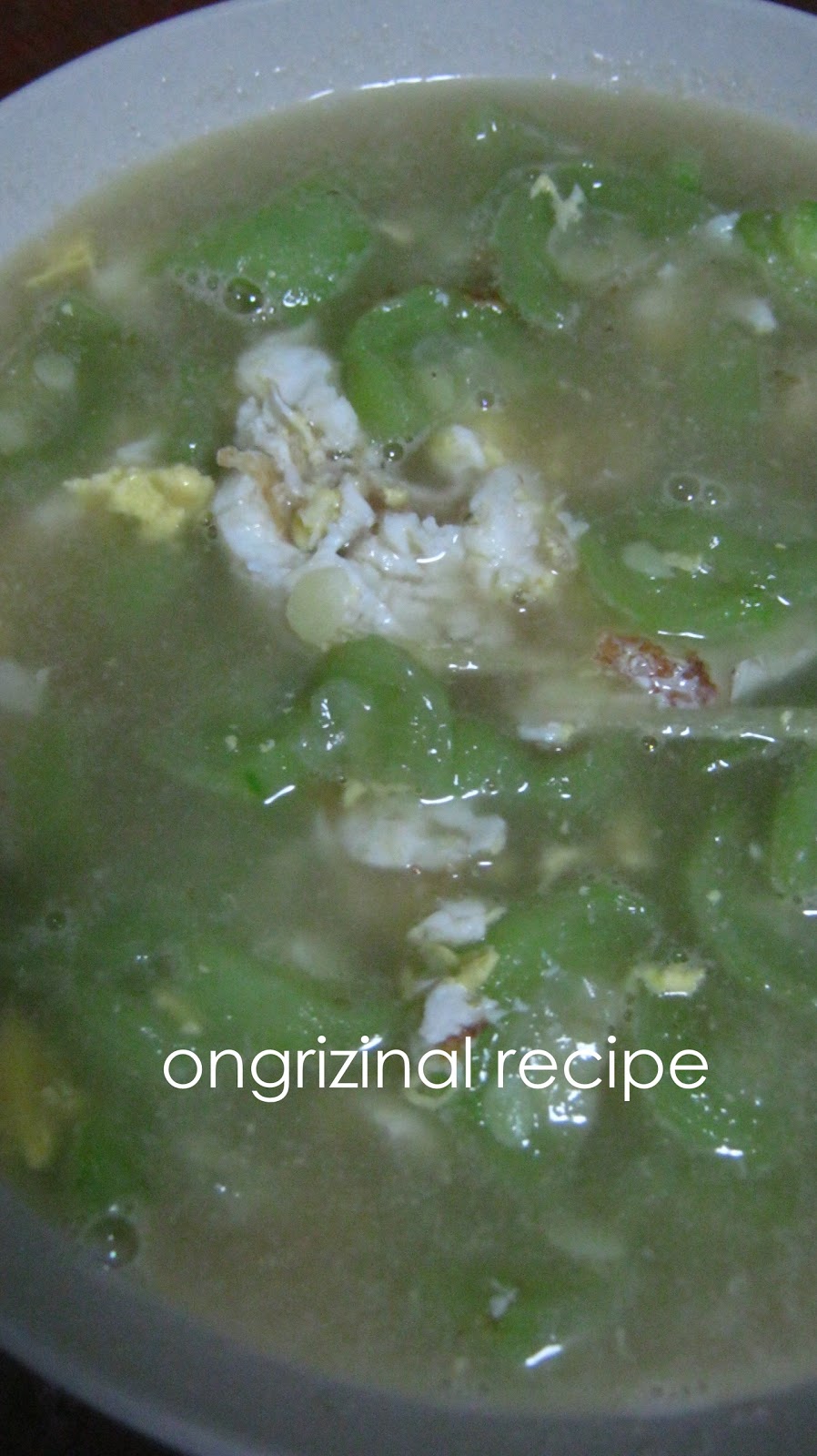
丝瓜汤 Smooth Luffa Soup


I have been having too much sir-fried smooth luffa recently, the vine seems doesn’t stop flowering and fruiting, or stop living for good.

Vowed to stop cooking it for the time being, I was however tempted to try something different with it.  So, I tried a soup version.

It started off exactly the same as stir-fried it with eggs, only to end it with a bowl-full of water pour into the wok, and bring to boil.

Of course, not to forget the salt and msg.


Chilies


The generic name 'Capsicum' is derived from the Greek word ‘kapto’, meaning ‘to bite’ or ‘to swallow.  

Capsicum consists of approximately 20 – 27 species.  Known species include : C. annuum, C. baccatum, C. buforum, C. campylopodium, C. cardenasii, C. chacoense, C. chinensis, C. cocineum, C. camutum, C. dimorphum, C. dusenii, C. eximium, C. flexuosum, C. frutescens, C. galapogoense, C. geminifolium, C.  hookerianum, C. lanceolatum, C. leptopodum, C. lycianthoides, C. minutiflorum, C. mirabile, C. mositicum, C. parvifolium, C. pubescens, C. rhomboideum, C. schottianum, C. scholnikianum, C. tovarii, and C. villosum.

There are 5 major species of Capsicum cultivated :

Capsicum annuum
Although the species name ‘annum’ means ‘annual’, from the Latin word ‘annus’, it is not an annual plant.  It can grow for several seasons and sometimes into a perennial shrub.
It originated from southern N.America, and northern S.America.

The flowers are white coloured, sometimes purplish.


Known varieties :  Aleppo , Anaheim,  Ancho, Banana pepper, Bell pepper, Cascabel, Cayenne, Chilaca, Chiltepin, Cubanelle, De árbol, Dundicut, Fresno, Guajillo, Hungarian wax, Italian sweet, Jalapeño, Mirasol, Macho, Mulato, New Mexico (Anaheim), Paprika, Pasilla, Peperoncini, Peter, Piquín, Pimento, Poblano,Puya, Serrano, Shishito, Tien Tsin


Chili Kulai


Bell Peppers


Capsicum frutescens
Originated from South America, or Central America.

The flowers are greenish white or greenish yellow.
The fruits typically are small; berries erect; ellipsoid-conical to lanceoloid shaped.
It is usually annuals or short-lived perennials.
Besides grown for human consumption, it is grown for ornamental use for its colourful ripening patterns and large quantities of berries.


Known cultivars & varieties : African Bird's Eye, Bird's Eye chili, Kambuzi pepper, Malagueta, piri-piri, Tabasco, Thai pepper

Thai


Capsicum chinensis
Despite its specific name ‘chinensis’, it is originated in the New World.  Nicolaur Joseph von Jacquin (1727-1817), a Cutch botanist, erroneously named it in 1776 as he believed that it was originated from China.
It is originated from Central America, the Yucatan region, and the Caribbean islands.

Flowers are whitish in colour.
Fruits varies greatly in shape and colour, with red, orange, yellow, and even brown.
Plants are usually perennial.

Known varieties : Adjuma, Ají Limo, Ají dulce, Arriba Saia, Datil, Fatalii, Habanero, Hainan Yellow Lantern Chili, Madame Jeanette, Naga Jolokia, Red Savina Habanero, Scotch Bonnet, Trinidad Scorpion, Umbigo de Tainha, Wiri Wiri, 7-Pot,


Capsicum pubescens
The name ‘pubescens’ means hairy, which refers to the hairy leaves of the plant.
It is distinguished from other chili species with its black seeds.

Originated from northeastern South America, and southern Central America.
The plant is a small shrub, sometimes a liana, perennial.
The flowers appear singly or in pairs.  Blue-violet coloured.

C. pubsescens is grown almost exclusively as the Rocoto variety.

Rocoto


Capsicum baccatum
Wild species C. baccatum var. baccatum is most common in Bolivia, Peru, Paraguay, northern Argentina, and southern Brazil.

Flowers are green or golden.
Fruits varies in shape and colour.

Some known varieties are : Ají , Bishop's Crown, Brazilian Starfish, Lemon Drop, Piquanté

Baccatum


references :